Shop Manual · E-450 Parts List

2000 Ford E-450, 7.3L Powerstroke — Every Part I Actually Used

Bought for $3,000, built for $10,000 all-in — 700W solar, a 280Ah LiFePO4 bank, and 60,000 miles on it since.

I run this rig

As an Amazon Associate I earn from qualifying purchases. Every Amazon link on this page is marked "(paid link)" — I only link parts that are actually bolted, wired, or plumbed into this rig.

Watch it first: Every part in our $10K E450 build (8.5-minute video, with chapters) — the same parts, walked through system by system.

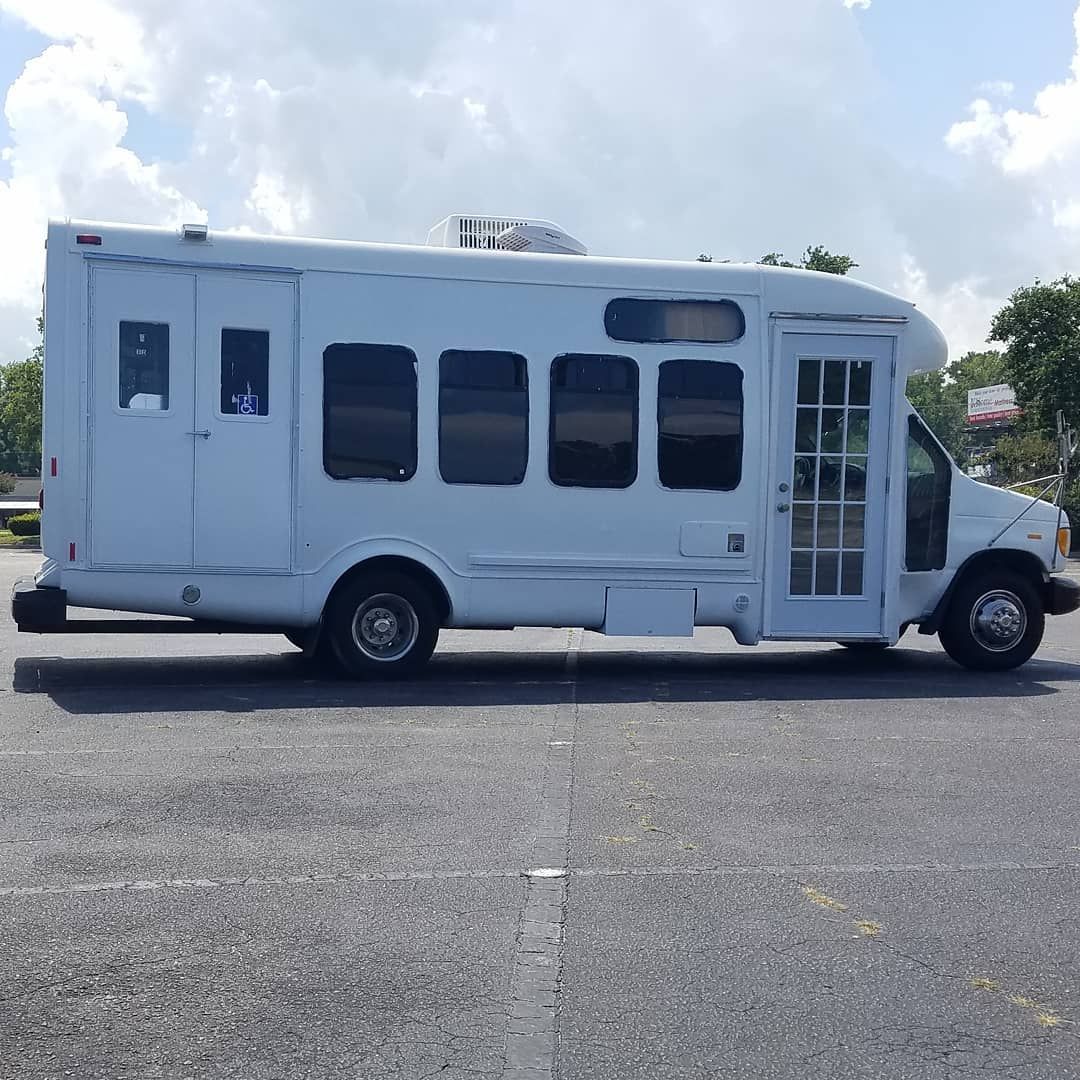
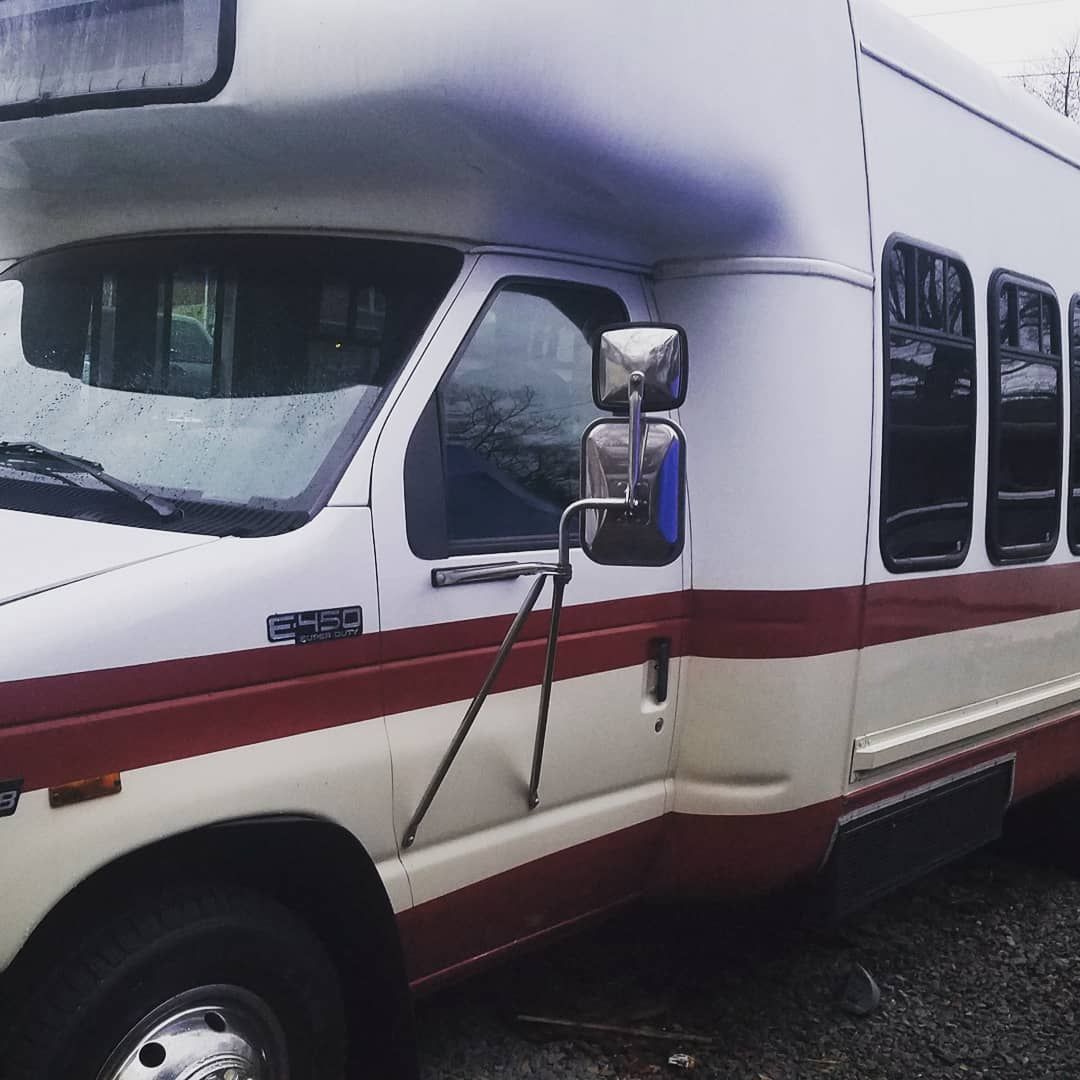
I bought this 2000 Ford E-450 with the 7.3L Powerstroke diesel for $3,000 from a family selling it on Facebook — it had about 140,000 miles on it at the time. I combined the chassis with the good appliances pulled out of a 1999 Prowler camper (the Prowler's roof was rotten, but the fridge, stove, and furnace were fine), and built the whole thing out myself: solar, batteries, water, heat, wiring, interior. All-in, the build cost $10,000. I've put 60,000 miles on it since, so it's sitting around 200,000 miles now.

Everything below is a part that's actually in the rig right now, organized by system, with a short note on what it does and why it's there. No prices — those change constantly on Amazon and I'm not going to post a number that's stale by the time you read this. Where I didn't have a hard fact to back up a claim, I left it out rather than guess.

Vehicle Data Plate

Field-verified
Chassis2000 Ford E-450, 7.3L Powerstroke diesel, box/bus conversion
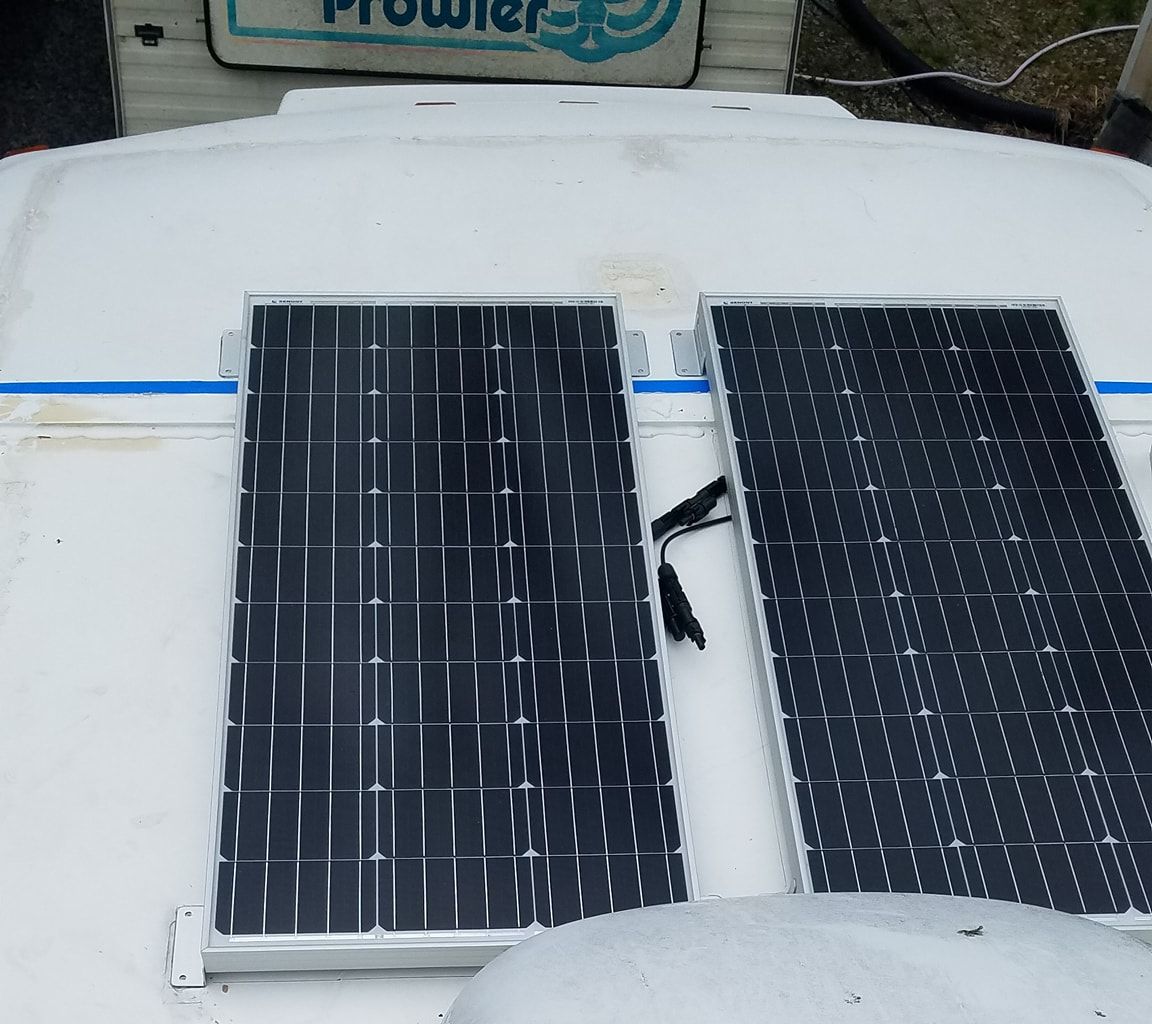
Solar700W total — 2×100W Renogy + 2×250W SanTan, two separate arrays / two controllers
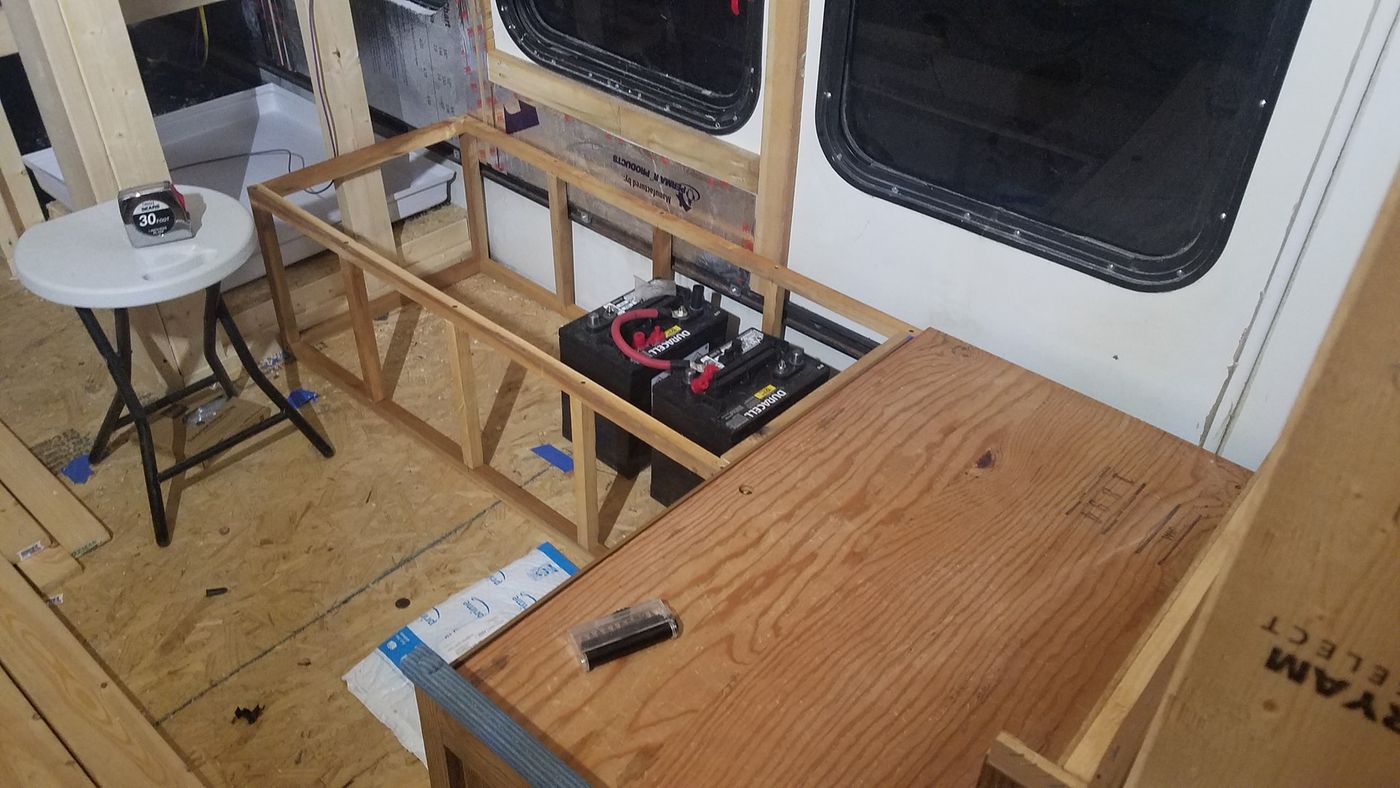
Battery280Ah LiFePO4, 12V system
HeatDiesel air heater + whole-house propane furnace
Water40-gal fresh · 27-gal gray · 27-gal black
Plates 1–10

The big-ticket parts

Order-verified

The systems that actually cost real money and that I'd research hardest if I were doing this again.

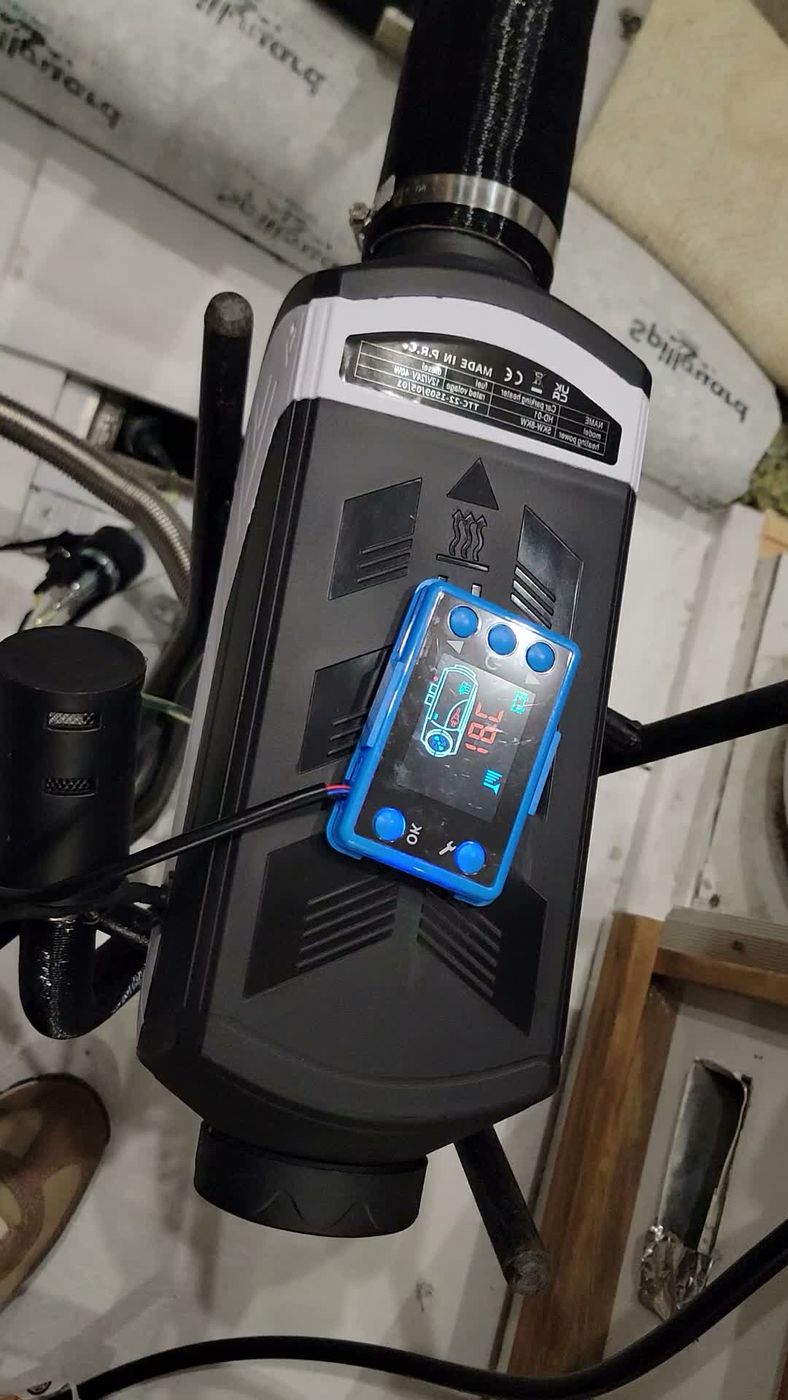
Diesel Air Heater XPORTION 8.3kW, Bluetooth + LCD control. Sips diesel, puts out serious heat — the reason cold-weather boondocking works. Listing currently unavailable
700W solar array — two separate systems No link — bought in person, not on Amazon. 2×100W Renogy panels run their own Renogy charge controller. 2×250W SanTan Solar panels run the PowMr 60A MPPT above. Two arrays, two controllers, 700W combined. No link
Fig. 1

Solar & electrical

The array is two separate systems, not one. The original 2×100W Renogy panels run their own Renogy charge controller. When I added the 2×250W SanTan panels, I put them on their own PowMr 60A MPPT instead of trying to merge everything into one controller — simpler wiring, and if one array or controller ever fails the other keeps making power. 700W combined feeds the 280Ah bank below.

SanTan Solar 250W panels (×2) No link — bought in person, not on Amazon. The second array, feeding the PowMr MPPT below. No link
Renogy charge controller (Renogy array) No link — bought in person, not on Amazon. Runs the 2×100W Renogy panels independently of the PowMr/SanTan pair. No link
Fig. 2

Batteries, power & wiring

One 280Ah LiFePO4 bank runs everything — fridge, lights, water pump, USB/12V outlets, the diesel heater's electronics. Shore power comes in through the converter when I'm plugged into a pedestal; the alternator tops it off through the DC-DC charger while driving. Everything downstream of the bank is 12V wiring, a switch panel, and a lot of crimped lugs.

Fig. 3

Heat & ventilation

Two heat sources: a diesel air heater for parking/boondocking, and the whole-house propane furnace that came with the Prowler donor. The Maxxfan and roof vent fan move air in and out — the Maxxfan runs even in light rain, which is the whole reason it's up there instead of a cheaper fan. Tank heater pads and heat tape keep the water system from freezing in cold-weather stops.

Diesel Air Heater XPORTION 8.3KW, Bluetooth + LCD control. Sips diesel, puts out serious heat. Listing currently unavailable
Rechargeable RV / Tent Clip Fan Battery clip fan for still nights off-grid. Amazon (paid link) ATEngeus 8 in Rechargeable Clip Fan Another rechargeable clip fan I run. Amazon (paid link)
Fig. 4

Water & plumbing

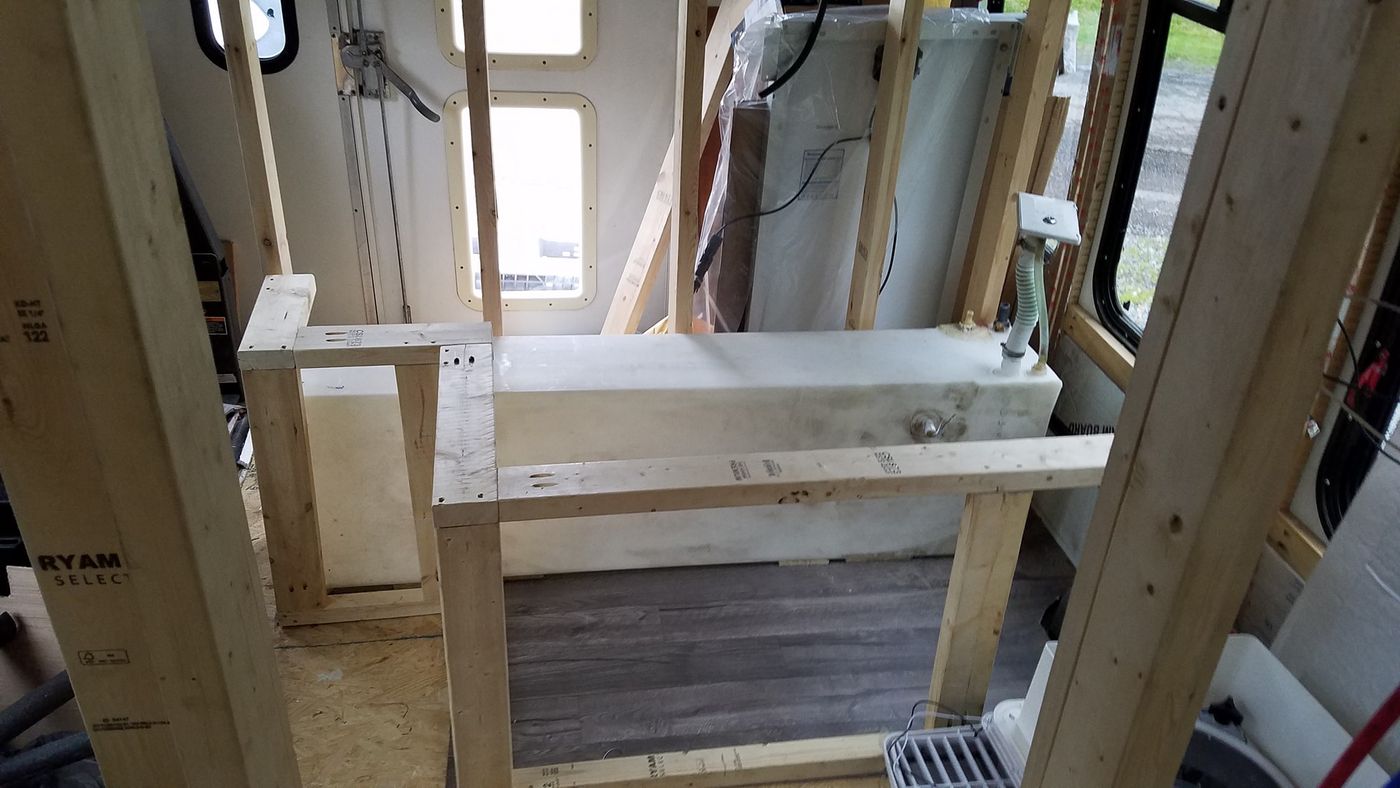
40 gallons fresh, 27 gray, 27 black. The fresh side runs through a strainer before the pump to keep grit out, then to the kitchen faucet and shower valve. On the waste side, the black tank empties through a tote tank I wheel to the dump when I'm parked somewhere for a while, instead of moving the whole rig.

Fig. 5

Roof & sealing

The roof gets a silicone coating over it and self-leveling sealant on every seam — vents, the Maxxfan, the AC curb — plus tape for quick patches between full reseals. R8 foil insulation cut down for the windows handles radiant heat on hot stops, and a bed-liner spray finish on the exterior panels hides dings and sheds road grime.

Fig. 6

Chassis & suspension

A camper conversion adds a lot of weight over stock, so the front-end steering and suspension parts got replaced rather than left original at 140k+ miles: shocks, steering damper, stabilizer link, tie rod end, and the radius arm bracket. Lug nuts sized for the 17" 8-lug wheel simulators finish out the rolling stock.

Fig. 7

7.3L Powerstroke engine

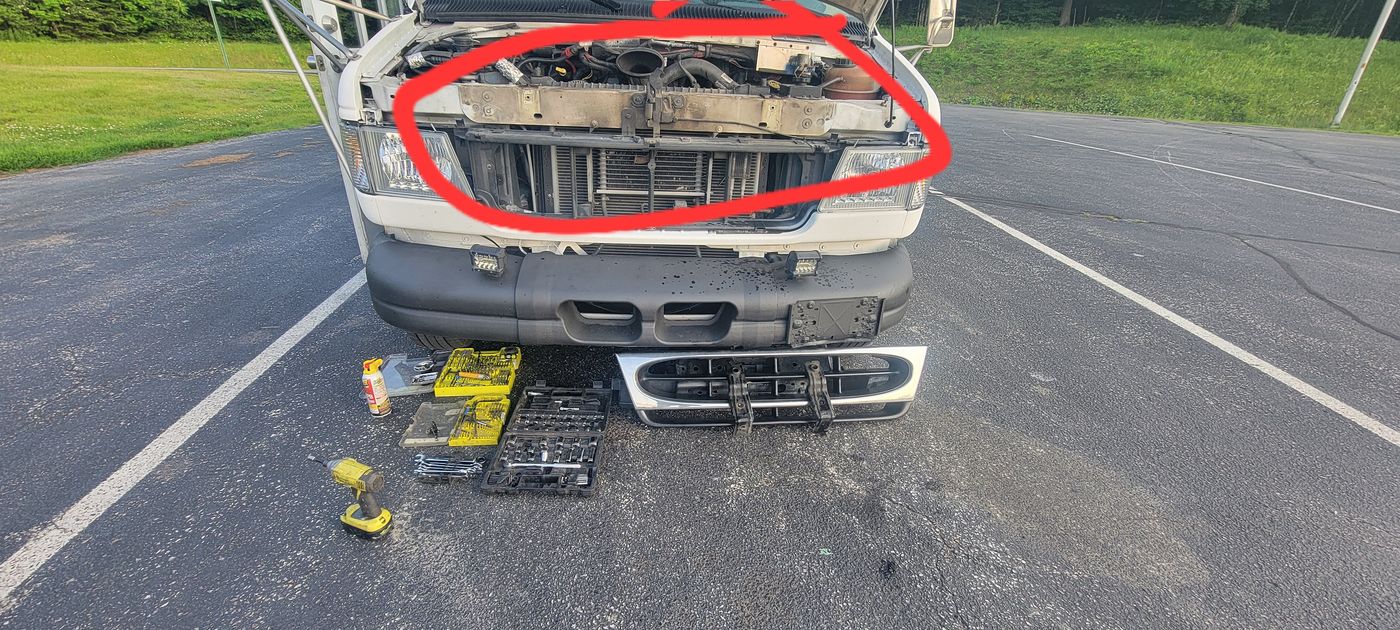
The 7.3L is the reason I bought this specific rig — old enough to be simple, no modern emissions plumbing to fail. The maintenance side is straightforward parts: water pump, air filter, glow-plug harness, up-pipes, fuel pickup screen, and a diesel-specific filter kit. Two transmission coolers are in this build — a direct-fit auxiliary cooler and a heavier 40k-GVW kit — because towing weight and mountain grades are what actually kill a 7.3L's transmission.

Fig. 8

Interior, galley & lighting

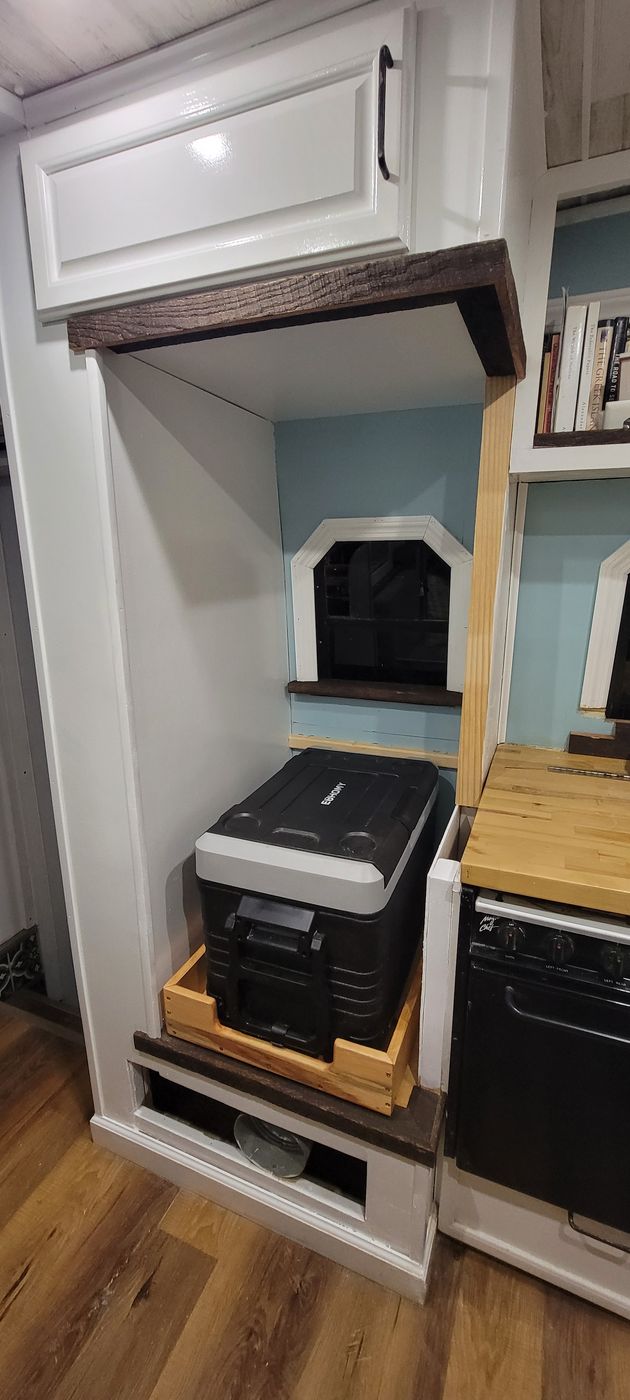
The stove is the one thing salvaged straight off the Prowler donor and it's still running. Everything else in the cabin is new: dimmable LED ceiling lights and puck lights over the galley on a touch dimmer, drawer slides on the storage, and a paint refinisher for the vinyl and plastic trim. Up front, the tail lights and fog bulbs are LED upgrades over stock, and the headlight bulbs are the one item here where the housing itself is a separate eBay find, not Amazon.

RV Stove / Cooktop Salvaged from the Prowler donor and still running — the full cook setup on the road. Amazon (paid link)
Fig. 9

Campsite gear

For the times solar and the battery bank aren't enough — cloudy stretches, or running something heavier than the inverter likes — there's a backup generator. Shade cloth cuts direct sun on hot stops. The signal booster and the rest of the work-from-the-road gear moved to the remote work gear.

TUPARKA 90% Shade Cloth (10x20) Blocks 90% of sun over the rig on hot summer stops. Amazon (paid link)
Fig. 10

Remote work gear

I work from the rig. The whole office is four things: a stand that turns any picnic table into a desk, a booster that makes one bar usable, a phone plan with a hotspot, and enough USB power that nothing dies mid-call. The laptop itself runs off the inverter and the 280Ah bank, with the generator as the backup.

Folding 360° Aluminum Laptop Stand My remote-work desk anywhere there's a picnic table. Folds flat, locks at height, spins so the screen faces away from the sun. Amazon (paid link) Visible Wireless, $45/mo Unlimited My data plan and mobile hotspot. $45 a month all-in, no contract. visible.com (not an affiliate link)
Fig. 11

Where I sleep for $0

Lodging is the line item that actually changes the math on full-time travel. I used to pay $800/mo in rent; now it's $0 most nights, split between free dispersed boondocking spots and a Harvest Hosts membership that gets me overnight parking at wineries, farms and breweries. Fuel runs about $400/mo on the 7.3L, data is $45/mo for the Visible Wireless unlimited hotspot plan, and I budget about $100/mo for maintenance.

$800 → $0Rent → lodging
$400Fuel / mo
$45Data / mo
$100Maintenance / mo
Harvest Hosts Free overnight parking at wineries, farms & breweries with a membership — my #1 free-lodging hack. I'm compensated if you join; you get 20% off. Harvest Hosts (affiliate link)
Appx. A

FAQ

How much did this build actually cost?

$3,000 for the 2000 Ford E-450 with the 7.3L Powerstroke, bought from a family on Facebook. The full conversion — solar, batteries, water, heat, wiring, interior — brought the all-in total to $10,000.

Is 700W of solar and a 280Ah battery enough to run everything off-grid?

Yes — it's running the whole rig off-grid on two separate arrays (2×100W Renogy, 2×250W SanTan) feeding one 280Ah LiFePO4 bank, with the WEN generator as backup for cloudy stretches.

What heats and cools the rig?

A diesel air heater and a whole-house propane furnace handle heat; a roof A/C unit handles cooling.

What are the tank sizes?

40 gallons fresh water, 27 gallons gray, 27 gallons black.

Where do you actually sleep for free?

A mix of free dispersed boondocking spots and Harvest Hosts — a membership that gets you overnight parking at wineries, farms and breweries. That combination is what takes lodging from $800/mo in rent to $0 most nights.

What donor parts came from the Prowler?

The 1999 Prowler camper's roof was rotten, but its appliances were fine — the fridge, stove and furnace all came off the Prowler and went into the E-450 build.

Index

More from the build

As an Amazon Associate I earn from qualifying purchases. Some links above are affiliate links — if you buy through them I earn a small commission at no extra cost to you. I only link gear I actually run in this rig. The $10k build cost, 700W solar, and 280Ah battery numbers are from my own build; your costs and mileage will vary.